Root Canal Treatment
Saving teeth that would otherwise need extraction. Comfortable appointments, modern technique.
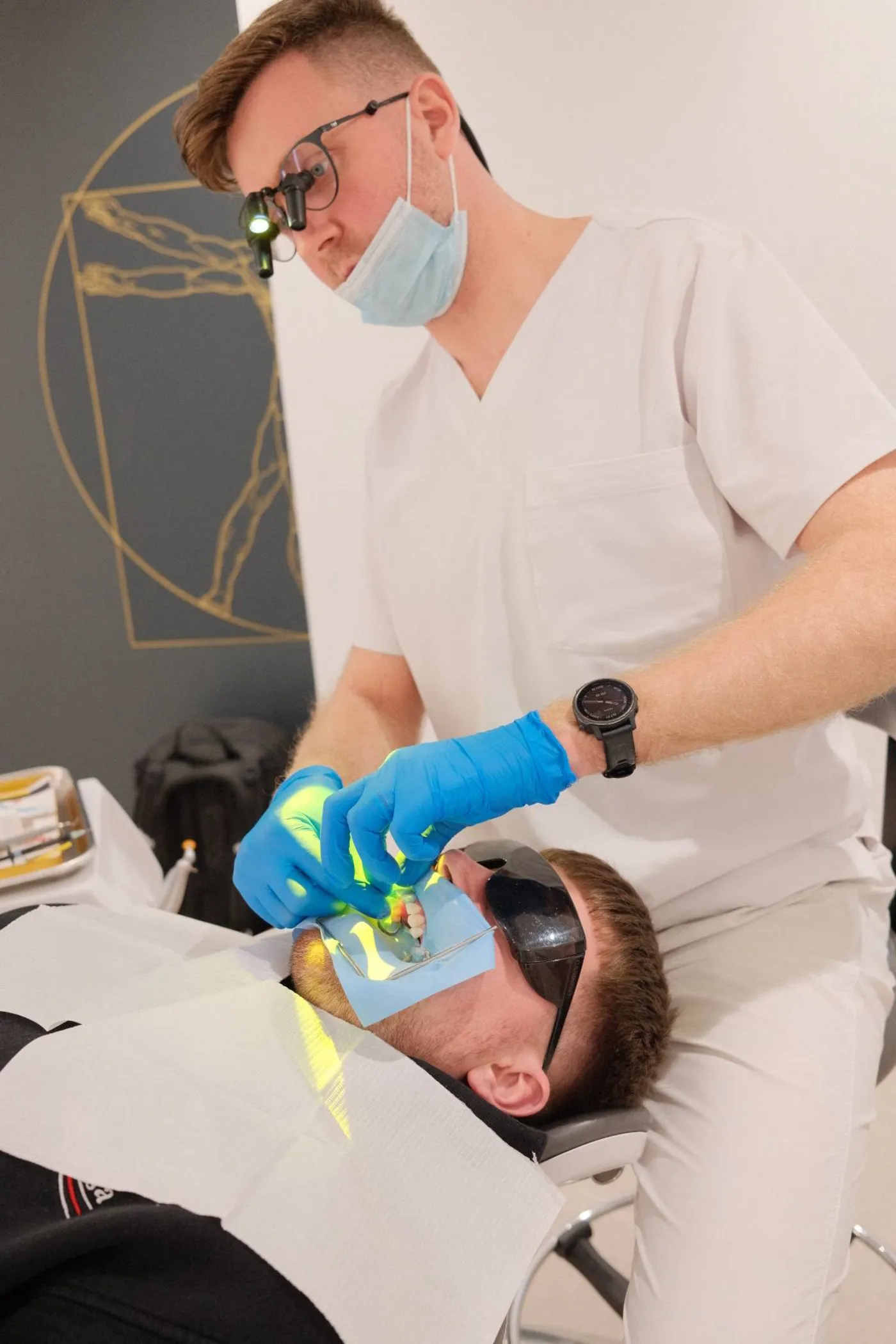
A root canal cleans out the infected nerve tissue inside a tooth and seals the canal so the tooth can stay in your mouth instead of being extracted. Most teeth take one appointment, occasionally two. Once the tooth is anaesthetised, the procedure is straightforward and comfortable, and treated teeth almost always need a crown afterwards to protect them from fracture.
What to know
- Saves the tooth. No extraction, no implant, no bridge needed.
- Most teeth take one appointment. Occasionally two.
- Once anaesthetised, it's comfortable throughout.
- Almost always followed by a crown to protect the tooth from fracture.
Why Save the Tooth
Keep your own tooth
Even a heavily damaged tooth can usually be saved. Your own root is always better than a replacement.
Modern, predictable technique
Modern root canal treatment has consistent, well-evidenced outcomes. The bar for success is high.
Settles the toothache quickly
The discomfort that brought you in usually clears within a few days of treatment.
Avoids the longer alternative
Extraction, healing, implant, healing, restoration. That's a 6-month sequence and significantly more cost. Root canal saves both.
Comfortable appointments
Once anaesthetic is in, the procedure feels like a deep filling. Most patients are surprised by how straightforward it is.
Crown on top to finish
Most teeth need a crown afterwards to protect from fracture. We plan the crown into the treatment from the start.
The Root Canal Process
Diagnosis
30 minutesWe confirm the source of the toothache with simple cold and pressure tests, plus an X-ray. Some complex cases benefit from a 3D scan.
Treatment Plan & Cost
Written plan covering the root canal itself plus the crown that will follow, with full costs upfront.
Root Canal Treatment
60-90 minutesLocal anaesthetic, then the canal is cleaned and sealed. Most teeth take one appointment, occasionally two.
Temporary Restoration
A temporary filling protects the tooth during the few weeks while we plan the crown.
Final Restoration
A crown or onlay is fitted to protect the tooth. Treated teeth tend to be more brittle and benefit from full coverage.
Follow-Up
Review at 6 to 12 months with an X-ray to confirm healing.
Investment
£600 front tooth, £720 premolar, £964 molar. Crown to follow priced separately.
Frequently Asked Questions
Yes. Once the tooth is anaesthetised, the procedure feels like a deep filling. Most patients are surprised by how straightforward it is. The toothache that brought you in usually settles within a few days of treatment, and any mild tenderness when biting clears within a week or two.
Related pages
Dental crown treatment in Kendal
A back tooth usually needs a crown after a root canal to protect it from fracture. Both are often planned together.
Read more →
Onlays in Kendal
Where enough of the tooth survives, a bonded onlay can protect it with less drilling than a full crown.
Read more →
Emergency dentist in Kendal
Toothache that keeps you up at night often means the nerve is involved. Same-day appointments available.
Read more →
Fillings and restorations in Kendal
Caught early, decay can be treated with a bonded filling before it ever reaches the nerve.
Read more →
Treatment is delivered by Dr Tristan Tinn, dentist in Kendal, at Crossbank Dental Care on Captain French Lane, a short walk from the Market Place.
Book Your Consultation
Ready to start your root canal treatment journey? Get in touch to arrange your consultation.
or book online
Get In Touch
Phone
01539 319170Location
Crossbank Dental Care
10 Captain French Lane
Kendal, LA9 4HP